
01
Control starts with the keys
A wallet signs payments. It does not hold a company-managed account balance or provide a remote reset for lost keys.
Key ownership and privacy
A lightweight desktop wallet built around local keys and Bitcoin’s public network. Understand what stays on your computer, what peers provide, and what a confirmed payment means.
The desktop-wallet model separates two jobs: your computer manages signing keys, while Bitcoin records payments. MultiBit’s lightweight approach connects those jobs without a complete blockchain download.
Local custody
Protect keys and recovery material, not just the application.
Bitcoin only
Addresses, fees, and confirmation rules belong to the Bitcoin network.
Desktop platforms
Review Windows, macOS, and Linux availability before installing.
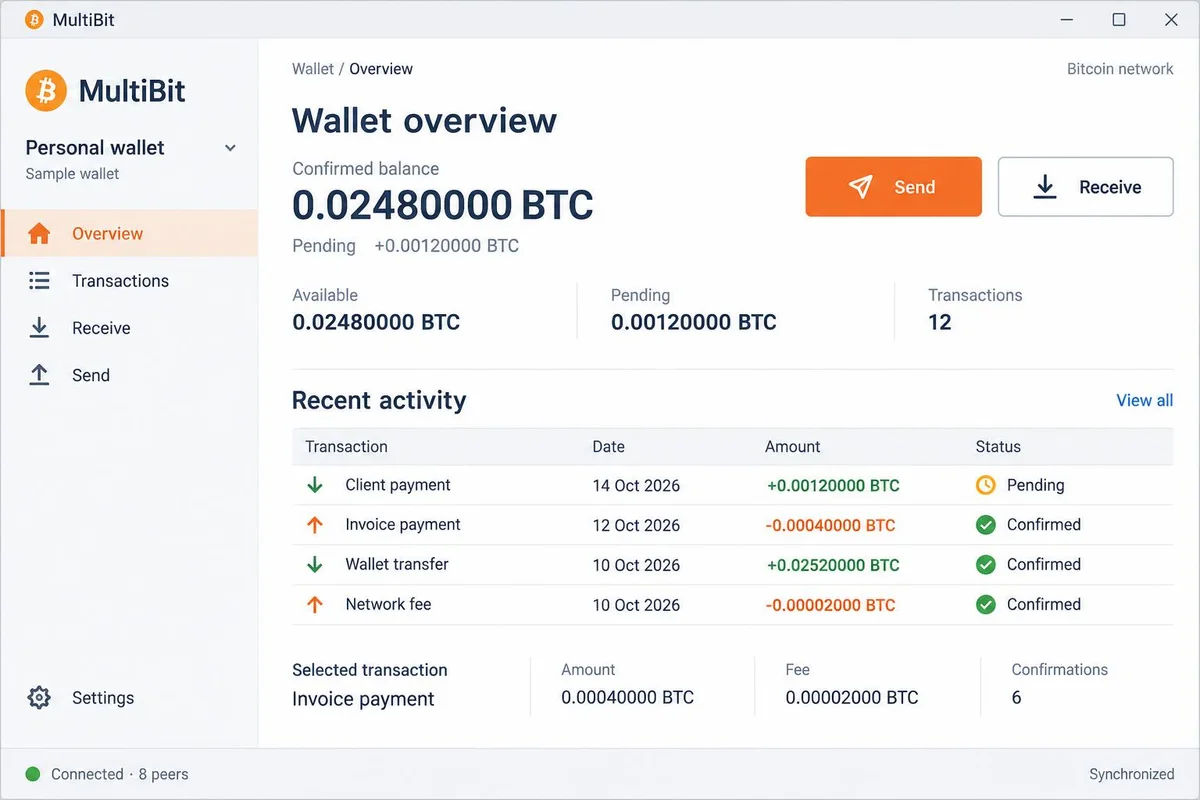
Signing, synchronization, and settlement are separate processes. Each has a different boundary of control.
Private keys authorize spending. The wallet signs on the device; a signed transaction can be shared without sharing the keys.
A device backup and a wallet recovery plan protect different things. Keep usable recovery material separate from your everyday computer.
Follow the change from a network announcement to a payment included in the chain. The amount stays the same; the evidence changes.
Read the status referenceThe transaction has been shared with the network. It may still wait for a block, and a wallet that is catching up may show incomplete information.
Check synchronization and the transaction ID before taking further action.
Bitcoin provides the protocol. Your wallet, your device, and your recovery practices determine how you interact with it. No single badge replaces that understanding.
A wallet signs payments. It does not hold a company-managed account balance or provide a remote reset for lost keys.
Key ownership and privacyHeader and inclusion checks use less data than a full node. Transaction discovery still depends on peers; not every consensus rule is checked locally.
Verification and trade-offsSource code, authenticated releases, and independent assessments matter more than assurances. This concept claims no audit or security certification.
File verification guidanceReview platform availability and installation guidance for Windows, macOS, and Linux.
 Download
for Windows
 Download
for macOS
 Download
for Linux